These are my rough notes on the subject of Transhumanism. I wanted to show these early notes in case the release of my essay seems jarring in its subject matter.
THIS IS NOT SCIENCE FICTION, It's happening right now.
Who
What
When
Where
How
The human condition as we know it is not a given constant, its not fixed. It is something that will change maybe not tomorrow but in the coming years or decades.
Technology has a big part in it, but we need to be wary of the things technology can do.
Humanity develops randomly, in ten years will people have more blue eyes or less, be taller or shorter? No one really knows.
Transhumanism seeks to bring the evolution of humanity under control through he use of technology. Allowing us to shape and change the future of the human race as we see fit. It is important to note that trans-humanist believe in a positive and bright future, we are all aware of the potential hazards of humanities reliance on technology. But trans-humanists are not immobilized by this, they strive forward hopeful.
robotics, nanotechnology, genetics, bionics, artificial intelligence
push and change human limits
no longer exclusively biological
Human beings are not designed for the modern age
soft tissue, surrounds strong bones, we could do with this the other way around.
Mankind has always sought longevity, immortality.
through transhumanism that is potentially possible.
how many people die every day? if this was preventable would we be working harder to change it?
cyborg manifesto
Evolution does not dictate
consciousness means that we have the capacity to reflect upon the world
ourselves our futures
choose our evolution
revolutionize
future technologies
3 areas 3 supers
super longevity
super intelligence
super well-being
Aubrey Degray
priorities
combat aging
modern medicine used to keep us healthy, why not treat aging
longevity
Huge questions
Ray Kurzweil
every year computers get more and more powerful faster and faster
the technological singularity
edit our bodies to interact with computers
symbiotic relationship
recorded human knowledge
unthinkable 20 or 30 years ago
artificial intelligence
AI will self improve
we merge with AI
what will reliance on computers mean for our future
Stephen hawking fears that AI will supersede us
David Pearce
remove suffering
we've been design to survive
today's world does not need the same things
we are aggressive jealous people
need to edit our genes
abolitionists
making children is down to chance
do we need suffering?
seen as far fetched but its not
live longer
integrate with technology
Bibliography
Cyborg Manifesto by Donna Harraway
http://www.egs.edu/faculty/donna-haraway/articles/donna-haraway-a-cyborg-manifesto/
The Real Cyborgs by Arthur House
http://s.telegraph.co.uk/graphics/projects/the-future-is-android/index.html
"On the shoulders of steel" Ted Talk by Rodney Brooks
https://www.youtube.com/watch?v=nA-J0510Pxs
Baxter the robot brewing Coffee or machine tending.
https://www.youtube.com/watch?v=AcxKd-oe-L0
https://www.youtube.com/watch?v=cFKRSvM45GI
Emily Howell - Robot Composer
https://www.youtube.com/watch?v=QEjdiE0AoCU
Article on Emily Howell by Jacqui Cheng
http://arstechnica.com/science/2009/09/virtual-composer-makes-beautiful-musicand-stirs-controversy/
The Coming Transhumanist Era by Jason Sosa
https://www.youtube.com/watch?v=1Ugo2KEV2XQ
Monday, 24 November 2014

Tuesday, 18 November 2014
An Exercise In Imagination.
An exercise in imagination
Perhaps I should have called this finding solutions with daydreaming?
The purpose of this exercise is to find a goal or ideal that you might not have previously thought about, a solution to a problem, a new path for you to follow (or not). To generate new ideas free of constraints, then you can build the constraints in afterwards.
Imagine a perfect world with no restrictions.
let your imagination run free and begin to describe a surreal future that has no limitations.
Now try to imagine doing/making/fixing the problem you have. For this example I'm going to invent a new way to make and sell my art/craft.
You could do this with anything.
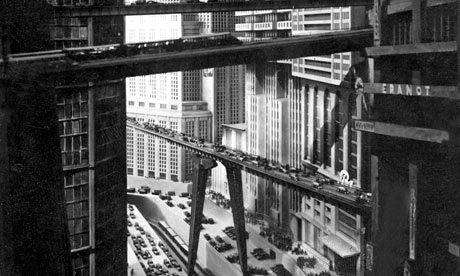 |
| Fritz Lang's Metropolis 1927 |
Humans have evolved, incorporating machines directly into their bodies and pushing the limits of what was previously considered impossible for both the body and mind. We live longer than ever, and the idea of countries and boundaries have changed to reflect a new kind of inter connectivity. With an even greater population and a lack of both funding and resources, we have (been forced to) become more sustainable. There is now a huge and ever expanding market for experience. Memories and feelings relating to travel, knowledge, skills are hugely sought after.
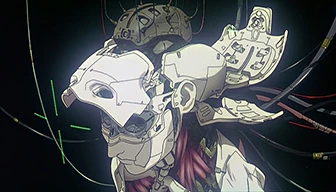 |
| Ghost In The Shell 1995 |
Connected more closely or intimately than we are already with mobile phones. Perhaps linked mentally/physically by a direct "log in" using our hybrid (cyborg) brains to access a vast and always online database.
We'll be able to communicate without handsets share memories, images, and experiences in moments. A world wide web with added emotions and a direct connection to each other.
The Solution To "How Will Customers Buy My Work"
In this world, my customers wont buy a particular piece of jewellery, but pay for and download the skills, practice and technical knowledge required to make it themselves. Instantly transferred to them, all they need are the materials. They can make it as much as they like, but the work would be protected under copyright from being re-sold.
The Solution To "How Will I Make New Work"
New work will be imagined, designed, similarly to how they are now. But my work would be either much more digital in its approach (rapid prototyping, CAD software, 3D scanning, etc) or would be more about new skills and experiences.
 |
| Global Connectivity Info-graphic by GSMA |
This would remove the need for me to make huge amount's of stock myself, and if the idea didn't sell, you'd just think of a new one for someone to buy. With a global reach, one good idea could make you rich.
How Could I Adapt This Solution To Work Right Now?
How does this translate to reality?
Let's face facts 1 in 4 people (worldwide) are on Facebook, the idea of every human on earth being connected digitally isn't that far fetched.
I could probably make e-tutorials on how to make jewellery and sell these online. There's also the possibility of a kind of "skills exchange" where I'm paid not to just make something but to teach someone how to do it so that they can make it themselves.
The idea of getting people to pay you to teach them how to make something is not new, but to do this in real time online is not something I've seen done. Is it possible to teach such a physical skill as jewellery making without ever meeting the person face to face?
My imaginary world also brought up the idea of copyrighting my work, which is something I should be doing anyway.
I could'nt find a useful link that might have more information on how to do this. I did find this one, which is similar;
http://www.visualthinkingmagic.com/framework/the-path/describe/imagine
Thursday, 13 November 2014
Public/Private Notes
Public/Private
Consultation/Commission
As The Maker
Most crafts are made for an imaginary private audience and it's very difficult to make things you don't like.
It's also difficult to predict what people will buy. The audience is implied by what sells.
Either it sells or it doesn't (there is a market or there is not).
Having a target audience gives companies a specific market to aim for.
But you need to earn their trust, so that when they buy one piece from you, they want to buy another. You are developing a relationship.
Feedback always comes after you made the item.
Feedback always comes after you made the item.
This implies artistic freedom to a point, as it can be disheartening to make stuff that doesn't sell.
Work can only cost what (limited) disposable income is available to you.
Maker has the power to decide what is artistic...
Market has the power to decide what is financially viable.
As The Buyer
You decide what you like & what you don't like, out of what is available.
The buyer always earns more than the artist (has more disposable income).
Your freedom is to consume and you are given the idea of choice, but you are only choosing within a set (you cannot buy what isn't available).
Why Commission Art?
An example of a commission that went badly.
 Dreamspace V was a large scale public art instillation made from 1996 to 2006 by artist Maurice Agis.
"Some of those who have experienced Dreamspace use the psychedelic language more akin to the Sixties to convey the sensation. "It's very womb-like and trippy. It's dreamy, a really nice vibe," one said. Previous visitors have likened the experience of walking through the labyrinth of coloured caverns to standing inside a rainbow fish."
The Guardian
Unfortunately one day, the installation made from huge pvc cells came loose from it's moorings killing two people and injuring fifteen more. The ensuing investigation, legal case and stress on Agis, literally destroyed him. During his trial for manslaughter and health & safety violations he vowed never to make a large scale sculpture or installation ever again. Two months after the legal case against him came to an end (charged with health & safety breach), Maurice Agis passed away.
Examples of Public Art
Art Is Good For You.
It's not about art - it's about the public (and their interaction with it)
Something of the public for the public
The irony of sculptures designed for a specific place being moved because of insurance.
Public space is now corporate space.
Governments/corporations own or rent it to fill with representations of themselves.
Art can sometimes need to compete with marketing installed with/by the same government or company that owns the space.
Some governments encourage the creation of public art.
Majority of countries have a % for art policy. Stating that if a new building is to be created a % of the funding goes towards a piece of public art.
But who decides what is in good taste, best value, who controls the gatekeeping for a project like that?
When does the 1% not work
Memorials & Monuments Are Public Art Too.
They promote well being, but you have to be extremely carefull about what you are trying to achieve.
Memorials be participatory work.
They can help indiviuals or community find a sense of ownership or closure for a particular event.
Especially in memorial work as they are specifically for remembrance.
It costs the same amount to make a piece of participatory (street/performance) art as it does to make a permanent sculpture.
You decide what you like & what you don't like, out of what is available.
The buyer always earns more than the artist (has more disposable income).
Your freedom is to consume and you are given the idea of choice, but you are only choosing within a set (you cannot buy what isn't available).
Why Commission Art?
- The commissioned artist gets to take someone else's idea and develop[ it with their own creative choices
- The commissioner has to accept that their idea will go through someone else's artistic choices.
- The person who originally designed the project may not know about material knowledge.
- It can sometimes be difficult to interpret an idea.
- It is important to remember that a commission is not a collaboration.
An example of a commission that went badly.
Dreamspace V was a large scale public art instillation made from 1996 to 2006 by artist Maurice Agis."Some of those who have experienced Dreamspace use the psychedelic language more akin to the Sixties to convey the sensation. "It's very womb-like and trippy. It's dreamy, a really nice vibe," one said. Previous visitors have likened the experience of walking through the labyrinth of coloured caverns to standing inside a rainbow fish."
The Guardian
Unfortunately one day, the installation made from huge pvc cells came loose from it's moorings killing two people and injuring fifteen more. The ensuing investigation, legal case and stress on Agis, literally destroyed him. During his trial for manslaughter and health & safety violations he vowed never to make a large scale sculpture or installation ever again. Two months after the legal case against him came to an end (charged with health & safety breach), Maurice Agis passed away.
Examples of Public Art
- Site specific art - built for a certain place
- Community engagement - to make a place or community "better"
- Is architecture public art?
- Memorials
- Unsolicited public art - like graffiti
- Can poetry be public art?
Art Is Good For You.
It's not about art - it's about the public (and their interaction with it)
Something of the public for the public
The irony of sculptures designed for a specific place being moved because of insurance.
Public space is now corporate space.
Governments/corporations own or rent it to fill with representations of themselves.
Art can sometimes need to compete with marketing installed with/by the same government or company that owns the space.
Some governments encourage the creation of public art.
Majority of countries have a % for art policy. Stating that if a new building is to be created a % of the funding goes towards a piece of public art.
But who decides what is in good taste, best value, who controls the gatekeeping for a project like that?
When does the 1% not work
Memorials & Monuments Are Public Art Too.
They promote well being, but you have to be extremely carefull about what you are trying to achieve.
Memorials be participatory work.
They can help indiviuals or community find a sense of ownership or closure for a particular event.
Especially in memorial work as they are specifically for remembrance.
It costs the same amount to make a piece of participatory (street/performance) art as it does to make a permanent sculpture.
Counter Monuments
Literally the opposite of a permanent memorial.
Criticising the idea of erecting a monument and then forgetting about the responsibility that we have to remember the event/conflict.
Jochen gerz creates interactive pieces that are ephemeral (not made to last).
They sometimes have a participatory element to them, but sometimes this is covered up or hidden after a certain time.
Friday, 31 October 2014
Collaboration Notes
Collaborations
What is a collaboration?
"The action of working with someone to produce something"
Oxford Dictionary 2014
How does collaboration differ from other forms of working together?
- Inspiration is not collaboration.
- You could be working with others and it still not be a collaboration.
- Each artist/maker maintains a sense of "brand" within the final product.
- The process cannot be one sided.
- Each person involved receives equal credit at the end.
"Bypassing galleries, Hirst chose an abandoned Docklands warehouse for the exhibit. The "Freeze" warehouse show not only provided a raw industrial atmosphere but also placed the art in the center of Britain’s youth-driven culture boom of the late 1980’s. "Freeze" jump-started the careers of several featured artists including Hirst, Sarah Lucas, Gary Hume, Angus Fairhurst and Fiona Rae.
invaluable.co.uk
Collaboration is different from commission.
Commissioned work is a pre-built idea that is then made by a specific person.
Art collectives could be a collaboration; people working together who have a shared aim,
they make decisions together, compromising where necessary, to create a piece of work that they are all happy with.
Art after de-skilling, worth a read;
Paper by John Roberts, University of Wolverhampton
How would collaboration effect tourism?
- The public might be willing to travel further to see a collaboration between two artists.
- Perhaps this collaboration might happen live.
- Or in a particular place, thereby increasing visitors to that area.
Some artists have said that they collaborate with others solely to get things made that they would not otherwise be capable of. Should artists know how to make the things they design? In my opinion if your going to call yourself a maker/craftsperson then yes.
Not a collaboration
The Boat Project

- The public were only involved, by donating items to be turned into a boat. You could argue that without them the boat wouldn't have been made, but that doesn't make it a collaboration.
- The boat being made from much loved wooden items with their own stories existed (unchanged) from the beginning.
I found it tricky to find a collaboration involving jewellery (in the UK), but I did find this article/interview with British artist Alex Monroe and jeweller Tania Kowalski.
Professional Jeweller Magazine; IN DEPTH: Jewellery's creative collaborations.
He talks about some of his collaborations, as well as how he picks which projects to collaborate on. He talks about how he picks collaborations based on;
- Not for personal financial gain.
- "They are generally all interesting projects that take jewellery in a new direction or they ask challenging questions and make a statement.”
- Sometimes its to raise money for charity.
- Its important that "the two companies share many of the same values in carrying out their traditional artistic crafts.”
- Tania Kowalski says "shared values are at the heart of the partnership, as opposed to a commercially driven paid for endorsement by a famous face.”
Some would argue that these aren't true collaborations either, but I honestly think the idea of collaboration has become so diluted that it's lost its original meaning.
Thursday, 23 October 2014
Narrative Enviroments Notes
Narrative Environments
A collection of brief notes on the ideas of narrative and environments.
What is narrative?
The simple answer is.... story. The stories we tell about ourselves. The assumptions we make about people, the way we dress, look, express ourselves, etc.
What is place?
- Where it could happen.
- Where it is happening.
"If you change the site you destroy the work"
Richard Sera
Land art
Process art
Performance art
Conceptual art
Installation art
Community based art
Public art
The work and it's context are often inseparable and most examples have some form of either unrepeatability or immobility from that specific place.
The body as a site
Interior or exterior?
How do we model art on the body?
Is a tattoo considered site specific art? can the same tattoo tell a different story if it is placed on a different part of the body or a different person?
Curation
How do you want people to experience the art you create?
What does the environment tell you about the work.
Can the location of the work you display give the work more or less legitimacy.
Heritage is important to craft as craft is rural at its roots. Heritage can also be a source of inspiration, tourism and memory.
Grayson Perry talks about the idea of "collective memory".
Does a piece of work need a story?
No But it is difficult to not put one onto a piece of work. Whether you want it to have one or not.
Does craft need a story?
Yes because it separates us from design or fine art. It gives it more importance to us, we like the story/heritage of craft.
What is the part of narrative?
Narrative informs the design, making and price of the piece. Depending on the narrative we place upon it, someone might think it is worth more or less.
It can also help to separate my design from yours.
Thursday, 9 October 2014
Anna Coleman Ladd
Anna Coleman Watts Ladd (July 15, 1878 – June 3, 1939)
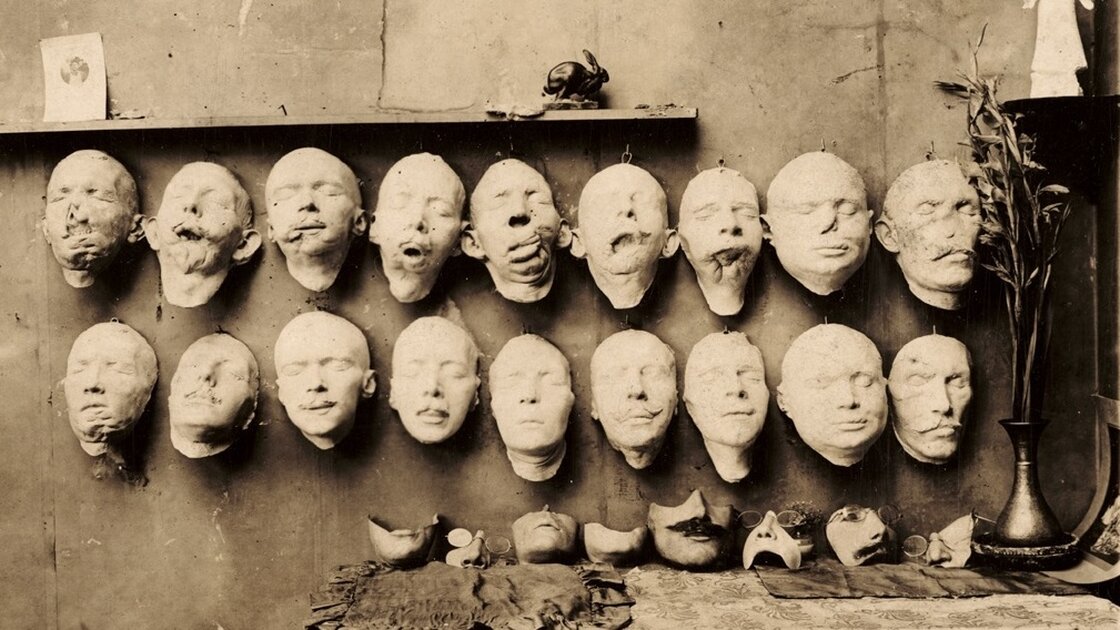 |
| Top Row shows casts of patients injuries. Bottom Row, work in progress and On the Table finished masks. Smithsonian.com |
Art is thought to change the way we perceive the world, but Anna Coleman Ladd made something that changed how we saw people.
World War One changed Europe forever, claiming the lives of 8 million people and wounding at least 20 million more. Soldiers were often horrifically maimed during the fierce trench fighting, whether by the heavy use of artillary shell or the machine gun.
"The part of the soldier's body that was most vulnerable was his face,
because if he looked up over a trench, that was the part that was going
to be hit," says David Lubin, professor of art at Wake Forest University.
These men felt that they could not return home to their wives, fiancees, friends and lives they left behind due to their disfigurements. A huge number of these soldiers were depressed or ostracised from society and this quickly became something that needed to change.
"These men couldn't be seen on the street," says Lubin. "They'd gone
through multiple operations, and they were seen as so hideous people
would sometimes pass out from seeing them."
 |
| Patients with facial injuries or masks gather for a Christmas party 1917. Smithsonian.com |
Francis Derwent Wood was working as a wartime orderly in 1917 and saw an opportunity to use his artistic abilities to help these men. He opened the first "Tin Noses Shop" although that could be the subject of a whole other blog post. Anna Coleman Ladd was a sculptor who between 1905 and 1917 was only known for her statues of children, nymphs
and historical figures, but due to her husbands involvement with the Red Cross Anna became exposed to Wood's work and knew she could help.
Wanting to improve upon his methods and work she scoured the front line hospitals for patients, opening her own studio in Paris. Using photographs (the camera being widely available from 1901) of the soldier taken before his injuries, or working from the patients descriptions, she sculpted a close facsimile of the man’s original features. Producing first a plaster cast then a mask of natural latex collected from evergreen trees. She would then galvanize this mask in a copper bath infused with electric current, resulting in the creation of a thin, light, mask that she could paint to match the soldier’s skin tone.
“If the wounded man was blind, the mask would be equipped with artificial eyes,” “Eyelashes, eyebrows, and even mustaches were affixed in the masks. They were light and durable. The masks will last a lifetime.”
Anna Coleman Ladd


These two images show the before and after of a soldier with a newly fitted mask. Smithsonian.com
It is beleived that between 1917 and 1919 Ladd and her colleagues created nearly 200 labour intensive hand crafted masks.
Eventually in 1932 the French government honoured Anna's work by awarding her the Legion d'Honneur Crois de Chevalier. Few if any of her masks seem to exist today and it is quite possible that some may have been buried with their owners (it is reported that Ladd apparently destroyed some herself). Sadly her accomplishments were largerly forgotten and by the time of her death in 1939 she was considered a minor sculptor, if she was remembered at all.
Although i'm sure that the soldiers and families she crafted back together, never forgot her name or the difference she made with thin copper, paint and string.
Questions on Craft Communities
Questions on Craft Communities
Is it important to feel part of a community of makers?
Yes, to generate inspiration and motivation. personally I work better when I have a few people around me to bounce ideas off and to look at problems from a different angle. I think without some form of community whether another artist sat next to you or a person/people you interact with in a forum online your work would certainly suffer.
What kinds of senses of community are important?
Honesty, support, technical knowledge, critique, experience, value.
The people who really like your work, might consider themselves fans. These fans are highly valuable to you as they spread the word about who you are, what you do, etc. They have the potential whether online or face to face to be a community of your own making.
What is your community of practice and interest?
My current community of practice would be jewellery & silversmithing at PCA, Flameworks?
My community of interest would be the Contextual Studies group at PCA, as well as; Plymouth Museum & Art Gallery, online forums like Cooksongold.co.uk, benchpeg, as well as other community interests like SDCC climbing club.
How you will make connections with these communities in your professional life?
After leaving PCA I will no longer have the regular face to face interaction with other students, so will need to interact with those communities to further my own learning. Researching what local groups exist and meeting or connecting online would help to keep me "in the loop". Local creative hubs like Radiant space, Pennycomequick Arts, Flameworks, etc would help with this. I may also use them to hel me find work.
How will/do you use digital communities?
I already use Pinterest, Facebook, Linkedin, Deviantart, Blogger, Benchpeg, CooksonGold's forum. I honestly believe that digital communities will play an increasingly important role in the future of all artists, whether they like it or not.
Luke Axworthy
Subscribe to:
Posts (Atom)