Friday, 31 October 2014

Collaboration Notes

Collaborations

What is a collaboration?
"The action of working with someone to produce something"
Oxford Dictionary 2014

How does collaboration differ from other forms of working together?
  • Inspiration is not collaboration.
  • You could be working with others and it still not be a collaboration.
  • Each artist/maker maintains a sense of "brand" within the final product.
  • The process cannot be one sided.
  •  Each person involved receives equal credit at the end.
 Young British Artists is an example of a collaboration. The 1988 "Freeze" exhibition saw Damien Hirst (a student himself at the time) curate art provided by other students.
"Bypassing galleries, Hirst chose an abandoned Docklands warehouse for the exhibit. The "Freeze" warehouse show not only provided a raw industrial atmosphere but also placed the art in the center of Britain’s youth-driven culture boom of the late 1980’s. "Freeze" jump-started the careers of several featured artists including Hirst, Sarah Lucas, Gary Hume, Angus Fairhurst and Fiona Rae.
invaluable.co.uk 


Collaboration is different from commission.
Commissioned work is a pre-built idea that is then made by a specific person.

Art collectives could be a collaboration; people working together who have a shared aim,
they make decisions together, compromising where necessary, to create a piece of work that they are all happy with.

Art after de-skilling, worth a read;
Paper by John Roberts, University of Wolverhampton


How would collaboration effect tourism?
  • The public might be willing to travel further to see a collaboration between two artists.
  • Perhaps this collaboration might happen live.
  • Or in a particular place, thereby increasing visitors to that area.

Some artists have said that they collaborate with others solely to get things made that they would not otherwise be capable of. Should artists know how to make the things they design? In my opinion if your going to call yourself a maker/craftsperson then yes.

Not a collaboration

The Boat Project

  • The public were only involved, by donating items to be turned into a boat. You could argue that without them the boat wouldn't have been made, but that doesn't make it a collaboration.
  • The boat being made from much loved wooden items with their own stories existed (unchanged) from the beginning.


I found it tricky to find a collaboration involving jewellery (in the UK), but I did find this article/interview with British artist Alex Monroe and jeweller Tania Kowalski.
Professional Jeweller Magazine; IN DEPTH: Jewellery's creative collaborations.

He talks about some of his collaborations, as well as how he picks which projects to collaborate on. He talks about how he picks collaborations based on;
  • Not for personal financial gain.
  • "They are generally all interesting projects that take jewellery in a new direction or they ask challenging questions and make a statement.”
  • Sometimes its to raise money for charity.
  • Its important that "the two companies share many of the same values in carrying out their traditional artistic crafts.”
  • Tania Kowalski says "shared values are at the heart of the partnership, as opposed to a commercially driven paid for endorsement by a famous face.”

Some would argue that these aren't true collaborations either, but I honestly think the idea of collaboration has become so diluted that it's lost its original meaning.

Thursday, 23 October 2014

Narrative Enviroments Notes

Narrative Environments

A collection of brief notes on the ideas of narrative and environments.

What is narrative?
The simple answer is.... story. The stories we tell about ourselves. The assumptions we make about people, the way we dress, look, express ourselves, etc.

What is place?
  • Where it could happen.
What is site?
  • Where it is happening.

"If you change the site you destroy the work"
Richard Sera

Site specific art is made for one particular place. How do we experience that place or site. Perhaps building a piece of art there can help to build a stronger sense of community or identity. Examples of site specific work can include;
Land art
Process art
Performance art
Conceptual art
Installation art
Community based art
Public art

The work and it's context are often inseparable and most examples have some form of either unrepeatability or immobility from that specific place.

The body as a site
Interior or exterior?

How do we model art on the body?
Is a tattoo considered site specific art? can the same tattoo tell a different story if it is placed on a different part of the body or a different person?

Curation
How do you want people to experience the art you create?
What does the environment tell you about the work.
Can the location of the work you display give the work more or less legitimacy.
Heritage is important to craft as craft is rural at its roots. Heritage can also be a source of inspiration, tourism and memory.

Grayson Perry talks about the idea of "collective memory".


Does a piece of work need a story?
No But it is difficult to not put one onto a piece of work. Whether you want it to have one or not.

Does craft need a story?
Yes because it separates us from design or fine art. It gives it more importance to us, we like the story/heritage of craft.

What is the part of narrative?
Narrative informs the design, making and price of the piece. Depending on the narrative we place upon it, someone might think it is worth more or less.
It can also help to separate my design from yours.

Thursday, 9 October 2014

Anna Coleman Ladd

Anna Coleman Watts Ladd (July 15, 1878 – June 3, 1939)


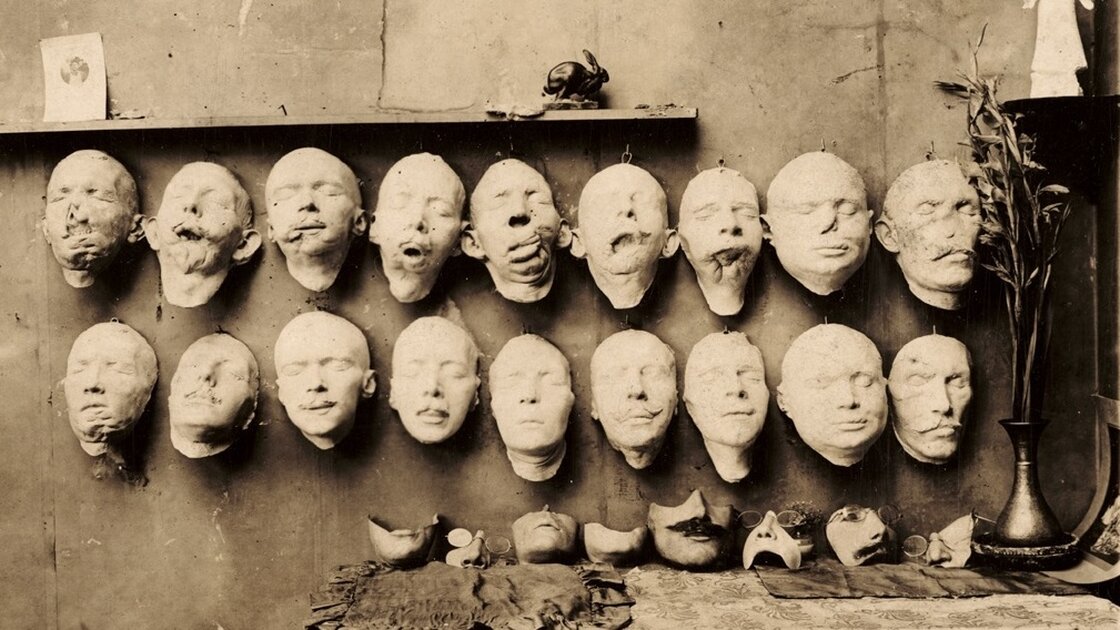
Top Row shows casts of patients injuries. Bottom Row, work in progress and  On the Table finished masks. Smithsonian.com


Art is thought to change the way we perceive the world, but Anna Coleman Ladd made something that changed how we saw people.


World War One changed Europe forever, claiming the lives of 8 million people and wounding at least 20 million more. Soldiers were often horrifically maimed during the fierce trench fighting, whether by the heavy use of artillary shell or the machine gun.
"The part of the soldier's body that was most vulnerable was his face, because if he looked up over a trench, that was the part that was going to be hit," says David Lubin, professor of art at Wake Forest University.
These men felt that they could not return home to their wives, fiancees, friends and lives they left behind due to their disfigurements. A huge number of these soldiers were depressed or ostracised from society and this quickly became something that needed to change.
"These men couldn't be seen on the street," says Lubin. "They'd gone through multiple operations, and they were seen as so hideous people would sometimes pass out from seeing them."

Patients with facial injuries or masks gather for a Christmas party 1917. Smithsonian.com


Francis Derwent Wood was working as a wartime orderly in 1917 and saw an opportunity to use his artistic abilities to help these men. He opened the first "Tin Noses Shop" although that could be the subject of a whole other blog post. Anna Coleman Ladd was a sculptor who between 1905 and 1917 was only known for her statues of children, nymphs and historical figures, but due to her husbands involvement with the Red Cross Anna became exposed to Wood's work and knew she could help.

Wanting to improve upon his methods and work she scoured the front line hospitals for patients, opening her own studio in Paris. Using photographs (the camera being widely available from 1901) of the soldier taken before his injuries, or working from the patients descriptions, she sculpted a close facsimile of the man’s original features. Producing first a plaster cast then a mask of natural latex collected from evergreen trees. She would then galvanize this mask in a copper bath infused with electric current, resulting in the creation of a thin, light, mask that she could paint to match the soldier’s skin tone.

“If the wounded man was blind, the mask would be equipped with artificial eyes,” “Eyelashes, eyebrows, and even mustaches were affixed in the masks. They were light and durable. The masks will last a lifetime.”
Anna Coleman Ladd


These two images show the before and after of a soldier with a newly fitted mask. Smithsonian.com

It is beleived that between 1917 and 1919 Ladd and her colleagues created nearly 200 labour intensive hand crafted masks.

Eventually in 1932 the French government honoured Anna's work by awarding her the Legion d'Honneur Crois de Chevalier. Few if any of her masks seem to exist today and it is quite possible that some may have been buried with their owners (it is reported that Ladd apparently destroyed some herself). Sadly her accomplishments were largerly forgotten and by the time of her death in 1939 she was considered a minor sculptor, if she was remembered at all.

Although i'm sure that the soldiers and families she crafted back together, never forgot her name or the difference she made with thin copper, paint and string.

Questions on Craft Communities

Questions on Craft Communities


Is it important to feel part of a community of makers?

Yes, to generate inspiration and motivation. personally I work better when I have a few people around me to bounce ideas off and to look at problems from a different angle. I think without some form of community whether another artist sat next to you or a person/people you interact with in a forum online your work would certainly suffer.
 

What kinds of senses of community are important?

Honesty, support, technical knowledge, critique, experience, value.

The people who really like your work, might consider themselves fans. These fans are highly valuable to you as they spread the word about who you are, what you do, etc. They have the potential whether online or face to face to be a community of your own making.

What is your community of practice and interest?


My current community of practice would be jewellery & silversmithing at PCA, Flameworks?

My community of interest would be the Contextual Studies group at PCA, as well as; Plymouth Museum & Art Gallery, online forums like Cooksongold.co.uk, benchpeg, as well as other community interests like SDCC climbing club.

How you will make connections with these communities in your professional life?


After leaving PCA I will no longer have the regular face to face interaction with other students, so will need to interact with those communities to further my own learning. Researching what local groups exist and meeting or connecting online would help to keep me "in the loop". Local creative hubs like Radiant space, Pennycomequick Arts, Flameworks, etc would help with this. I may also use them to hel me find work.

How will/do you use digital communities?


I already use Pinterest, Facebook, Linkedin, Deviantart, Blogger, Benchpeg, CooksonGold's forum. I honestly believe that digital communities will play an increasingly important role in the future of all artists, whether they like it or not.


Luke Axworthy

Wednesday, 8 October 2014

Communities of Craft


Communities of Craft

™Communities of practice

™The groups we seperate ourselves into, different disciplines or types of craft.™

Communities of interest

™What is of interest to you, or where you choose to work.

History shows craft's involvment in all kinds of communities, whether to give the maker/buyer a sense of identity or show an individulas nationalism. Some examples include;

  • ™Guilds
  • ™Craft communes
  • ™Craft associations
  • ™Craft groups
  • ™Craft advocates
  • ™Craft events (quilting bees etc)
  • ™Nationalism


™Ireland and Scotland have strong craft communities based on the idea of ™tourism. You can go and have a tour of potters workshops, traditional handicrafts, woodworking etc.

Artists/makers sell more of their work if the general public watch them make it. It gives people the illusion of participation or involvement.

You could make for a community or be a community of making.

Craft council craft clubs

Following a successful first year of activity the Craft Club scheme now has 350 active clubs in primary schools across the UK teaching children craft skills with the help of local volunteers via lunchtime or after-school clubs.

™™A community of ideology, brought together by common beliefs? Like the..


Heritage Crafts Association 

Key goals

™    change people’s habits of consumption

™    move from passive consumers to active citizens

™    share products and services

™    reduce material and energy consumption

™    reconnect; with community, neighbours, family, friends, earth, nature

™    build safe positive communities

™    true materialism; a positive, sustainable and healthy way of relating to material stuff


™And our means to getting there?

™    sharing skills, by sharing skills we also share values

™    encourage individuals to organise skill share events

™    use enabling spaces for events eg village halls

™    use digital media to spread the message

™    finally we got rather idealistic and imagined a "social tax" where in   your 70 years in society you had a duty to give something back.


™™Situated communities might be involved with trying to improve local spaces or towns.™

™Pullens Yard London

™A community for selling and making.

™Marketplaces might have their own communities.

You can also have ™digital communities


™“There is no doubt that the future belongs to the virtual spaces of craft” – Sandra Alfoldy (2007) in Neocraft:  modernity and the crafts


Examples;
  • ™How to…
  • ™Craftster.org
  • ™craftzine
  • ™advice
  • ™Getcrafty.com
  • ™For sale…
  • ™Social media
  • ™LinkedIn
  • ™Facebook
  • ™Blogs             


™Craftmafia - worldwide


™The Glasgow Craft Mafia is a group of crafty businesses dedicated to supporting each other, promoting DIY craftiness in Glasgow and beyond, and generally crafting up a whole heap of trouble here in the wild, wild West of Scotland. We're part of the larger Craft Mafia Familia first started in Austin, Texas.


Why craft and why now?
 Craft practices have great potential to connect people together, whether in person or virtually. Through learning to make, we can share in communities of knowledge, skills and interest. We can communicate through shared memories and values, such as a mutual commitment to activism or sustainable living, a need to establish alternative ways of working, or simply the desire to decorate, repair or improve the quality of our lives.